Adding Skateboarding to Your Rec Center or Community Center Programming
A practical guide for program directors, parks departments, and youth coordinators who want to offer something different—and reach the kids who aren’t signing up for anything else.
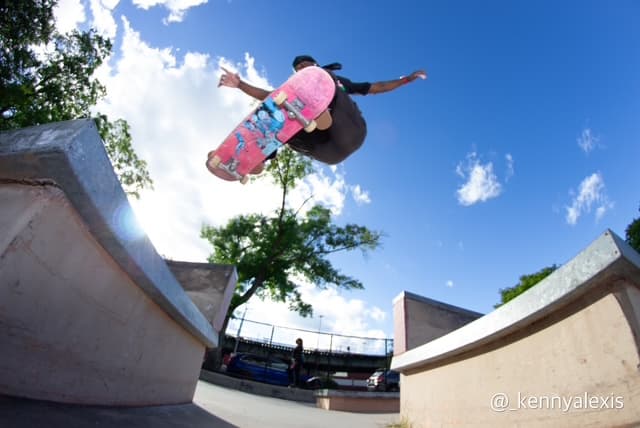
If you run programming at a rec center, community center, YMCA, Boys & Girls Club, or parks department, you already know the pattern. Basketball fills up. Soccer fills up. Swim fills up. And then there’s a group of kids—sometimes a big group—who don’t sign up for any of it.
Those are the kids skateboarding reaches. I’ve been teaching skateboarding for over 20 years in NYC and Westchester, and the most consistent thing I hear from program directors after we run a series is: “We had kids show up who don’t come to anything else.”
This is a walkthrough of what a rec center skateboarding program looks like, what your facility needs to provide (short answer: not much), and how to get one on your calendar.
Why rec centers and community centers are adding skateboarding
The Aspen Institute’s Project Play report found that 70% of kids drop out of organized sports by age 13. The top reason: it stopped being fun. Skateboarding sidesteps the structures that push kids out—tryouts, bench time, competitive pressure—and replaces them with something self-directed and personal.
The practical reason is simple. Traditional rec center sports—basketball leagues, flag football, baseball clinics—draw a certain type of kid. Athletic, social, comfortable with competition. Those programs work. But they leave out kids who don’t want to be on a team, who don’t thrive in competitive settings, who have already tried the team-sport thing and walked away.
Skateboarding reaches that group. It’s individual. There are no tryouts. There’s no bench. Progress is personal—every kid works at their own pace, and every milestone belongs to them. For a program director trying to serve a wider population, that fills a real gap.
Skateboarding also draws kids across a wide age range. A session with 7-year-olds and 13-year-olds in the same group works, because they’re not competing against each other. They’re each working on their own thing. That kind of flexibility is hard to get with team sports.
And it’s not a niche interest anymore. Skateboarding has been in the Olympics since 2020, and youth participation has been climbing. Parents are more open to it than they were ten years ago, and kids are already asking for it.
What a rec center skateboarding program looks like
A typical program runs as a weekly series—four to eight sessions, 60 to 90 minutes each. But it’s flexible. Some facilities book a single demo session first to gauge interest before committing to a full series. Some run ongoing weekly programs through an entire season. Whatever works for your schedule.
Here’s the general structure of each session:
- Safety briefing and gear-up(10 minutes)—every participant gets a helmet, knee pads, elbow pads, and wrist guards. I cover how to fall safely before anyone gets on a board.
- Fundamentals(20–30 minutes)—stance, balance, pushing, turning, stopping. Beginners start here. Returning students pick up where they left off.
- Skills progression(20–30 minutes)—once the basics are solid, kids work on their own goals. Some want to learn to drop in. Some want kickflips. Some just want to get more comfortable cruising. Each kid gets individual coaching within the group setting.
- Open practice(10–15 minutes)—free skate time where kids can practice what they’ve learned, try new things, and skate with each other.
Groups are capped at 20 per session. For groups over 10, I bring an assistant instructor so the ratio stays manageable and every kid gets hands-on attention.
The curriculum builds week to week. By session four, kids who started as complete beginners are riding independently, turning confidently, and working on their first trick. I’ve run this format with schools, community organizations, and private groups, and the progression is consistent.
What makes this different from your other sports programs
Most rec center sports programs run on the same model: drills, scrimmages, games. Kids who are already athletic do well. Kids who aren’t fall behind and eventually stop coming. Skateboarding works differently because the structure itself is different.
There’s no score and no opponent. Nobody wins and nobody loses. That sounds like a small thing, but for a lot of kids it’s the entire reason they’ll try this when they won’t try basketball. The pressure of competition is what drives them away from sports in the first place, and removing it changes everything about how they show up.
It’s also genuinely creative. Skateboarding is as much about self-expression as it is about physical skill. Two kids at the same level can look completely different on a board—one smooth and flowing, another sharp and technical. There’s no correct style. Kids who are drawn to art, music, or building things tend to connect with skateboarding in a way they don’t with conventional sports.
For the kids who do have ADHD or are neurodiverse, skateboarding tends to work where structured team sports don’t. The constant movement, the lack of waiting around, and the immediate feedback loop of trying a trick—it matches how their brains want to work. I see this in almost every group I teach.
And there’s the resilience piece. Skateboarding teaches kids how to fall and get back up, literally and in every other sense. You don’t land a trick the first time. Or the fifth time. The cycle of trying, failing, adjusting, and trying again is built into every session. That’s the same persistence and grit that coaches try to develop through team drills—it just happens organically here.
Want to bring skateboarding to your facility?
Call or book online to discuss programming for your rec center, community center, or parks department.
Space, equipment, and logistics
This is the part program directors usually want to know first, so here it is straight.
Equipment
I bring everything. Boards, helmets, knee pads, elbow pads, wrist guards—all sized for each participant. Your facility doesn’t need to buy, store, or maintain any equipment. Participants just need closed-toe shoes and clothes they can move in.
Space
Any smooth, flat surface works. A gymnasium, a paved outdoor area, a parking lot, a multipurpose room with hard flooring, an outdoor basketball court. Rough or cracked asphalt doesn’t work well—wheels need a reasonably smooth surface. The minimum usable area is about 40 by 60 feet for a group of 15.
If your facility is near a public skatepark, sessions can run there instead. Many parks departments in Westchester and NYC already have skateparks that are underused during weekday hours.
Scheduling
Programs run during whatever time slot works for your calendar—after school, weekends, summer camp hours, holiday break programs. Most facilities slot it into an existing enrichment block. A single session is 60 to 90 minutes, and a standard series runs four to eight weeks.
Insurance and liability
I carry my own liability insurance. Your facility’s standard participant waivers apply as they would for any physical activity. Safety is part of the curriculum itself—kids learn how to fall before they learn how to ride. Every session starts with a safety briefing, and every participant wears full protective gear for the duration.
Budget
Pricing depends on the number of sessions, group size, and whether you’re booking a one-time event or a recurring series. I work with facilities to fit their budget and can structure it as a flat program fee or a per-participant rate. The best way to get a number is to call me directly or book a call to talk through what you need.
Who this works for
I’ve run programs with a range of organizations, and the format adapts well to different settings:
- Recreation centers—weekly after-school or weekend enrichment programs
- Community centers—summer camp programming, holiday break activities, youth engagement
- YMCAs—youth enrichment series, teen programming, family events
- Boys & Girls Clubs—after-school programming and special events
- Parks departments—seasonal programs, skatepark activation, community events
- Private groups—birthday parties, team outings, scout troops, homeschool co-ops
The common thread: organizations that serve youth and want programming that reaches beyond the usual lineup. If your roster has room for something kids haven’t seen before, this fills it.
How to get started
The easiest first step is a conversation. Tell me about your facility, the age range you serve, how many kids you’re looking to accommodate, and what time slots you have available. I’ll put together a program proposal that fits your setup.
If you want to test it before committing to a full series, we can start with a single demo session. That gives you and your staff a chance to see how it runs, gauge the kids’ response, and decide if it’s something you want to build into your regular programming.
I teach across NYC and Westchester County and can travel to your location. For more on how group programs work, see the group lessons page. For school-specific programming, there’s a separate schools page with more detail on how that works.
Call me at (914) 294-4407 or book a call online. I’ll get back to you within a day.
Frequently Asked Questions
Does our rec center need to own skateboards or equipment?+
No. I bring all equipment — skateboards, helmets, knee pads, elbow pads, and wrist guards — sized for every participant. Your facility just needs to provide the space.
What ages work for a community center skateboarding program?+
Programs work for kids as young as 5 up through teens. Most rec center programs serve the 6-14 age range. The curriculum adjusts for age and ability, and mixed-age groups work well when grouped by general skill level.
How much space does a skateboarding program need?+
A smooth, flat surface of at least 40 by 60 feet works for groups up to 15. A gymnasium, parking lot, outdoor basketball court, or multipurpose room with hard flooring all work. If your facility is near a public skatepark, sessions can run there instead.
How large can groups be for a rec center skateboard program?+
Groups are capped at 20 per session. For groups over 10, an assistant instructor is brought in to keep the ratio manageable and make sure every kid gets individual attention.
Ready to add skateboarding to your programming?
20+ years of instruction. All equipment provided. NYC and Westchester County.