Why Skateboarding Builds Resilience (And Why That Matters)
The research is catching up to what skaters have known for decades: skateboarding rewires how you respond to failure.
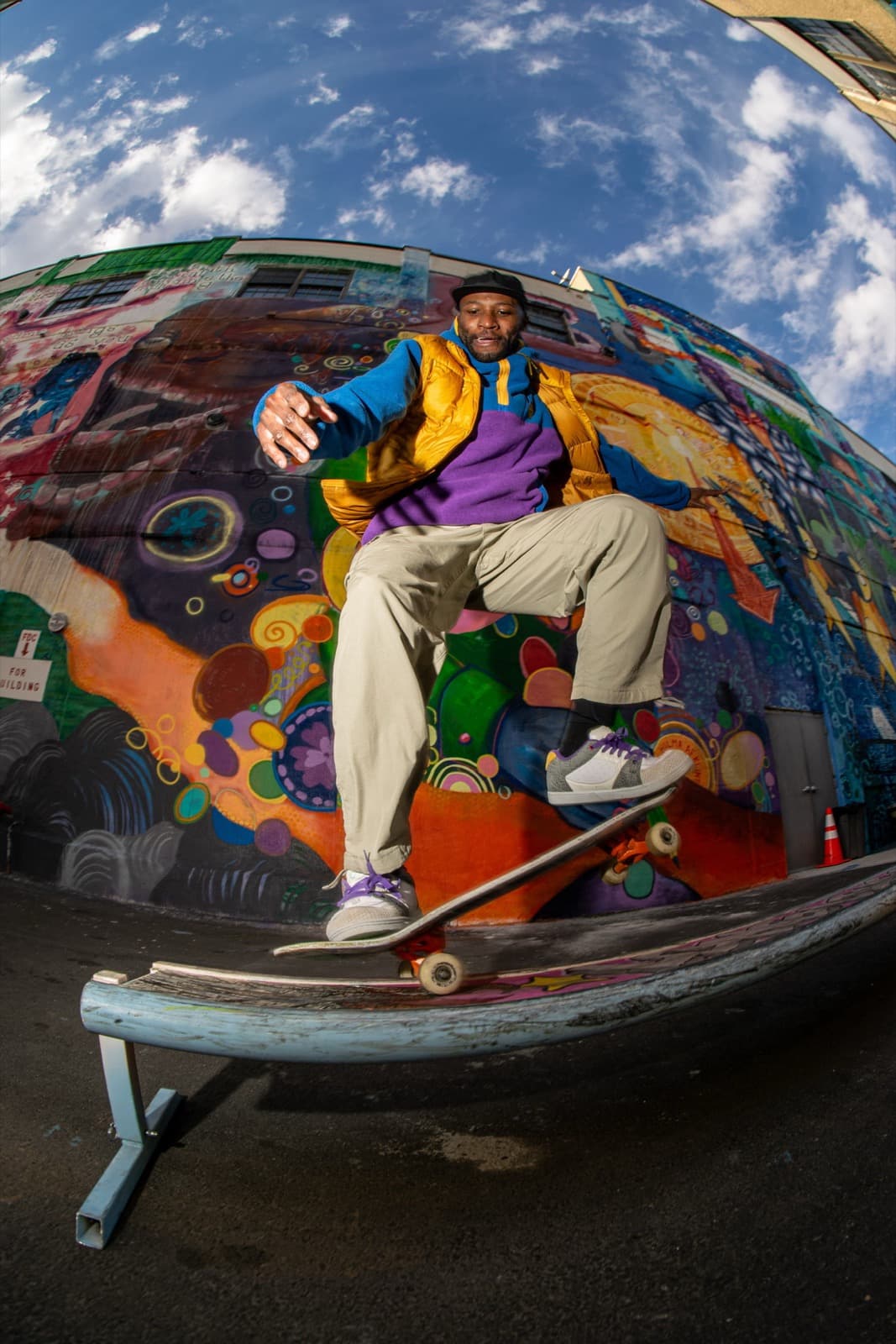
I’ve been skating for over 30 years. In that time, I’ve failed at tricks thousands of times. Tens of thousands, probably. And every single failure taught me something: about my body, about my fear, about what happens when you get back up instead of walking away.
I’m not a scientist. But I see the research now confirming what I’ve watched happen in 20+ years of teaching: skateboarding changes people. Physically, sure. But it also changes how they think about struggle, about progress, about themselves.
Does skateboarding build resilience in kids?
Yes—and the research backs it up. A landmark USC study funded by the Tony Hawk Foundation surveyed over 5,000 skaters and found that the vast majority skateboard primarily for stress relief and fun, not competition. Researchers noted that skaters develop strong critical thinking and problem-solving skills—core components of what the American Psychological Association defines as resilience.
The University of Southern California’s Pullias Center conducted one of the largest studies ever on skateboarding culture. Funded by the Tony Hawk Foundation, researchers surveyed over 5,000 skaters and conducted 120+ interviews across the country. As The Skatepark Project reported, the vast majority of skaters surveyed indicated they skateboard for fun and to relieve stress. Not competition. Not clout. Stress relief.
Researcher Neftalie Williams noted that skaters develop strong critical thinking and problem-solving skills, and they tend to view success from a more communal perspective. Follow-up research from USC highlighted how the action of skateboarding and the community connected to skating were key elements in relieving stress, navigating hardships, and simply facilitating fun. That’s not something most individual sports can claim.
Can skateboarding create a flow state?
It can, and it does so more reliably than most sports. A 2010 study in the Journal of Happiness Studies found that skateboarding’s high autonomy and lack of external regulation make it uniquely suited to producing what psychologist Mihaly Csikszentmihalyi called “flow”—a state of deep absorption where anxiety, distraction, and self-consciousness temporarily disappear.
Research by Nottingham Trent University studied female skateboarders aged 8 to 27 and found that the concentration and immersion required by skateboarding creates a deep sense of wellbeing and calm. Participants described the experience using language usually reserved for mindfulness and meditation, what the researchers called “free therapy.”
This is what psychologist Mihaly Csikszentmihalyi called “flow,” a mental state where you’re so absorbed in what you’re doing that everything else disappears. Your phone, your worries, your to-do list. A 2010 study in the Journal of Happiness Studies found that skateboarding, because of its high autonomy and lack of external regulation, is uniquely suited to producing flow states. More than most other sports.
I see this in my students constantly. They show up stressed from work, anxious about learning something new, self-conscious about being a beginner. Thirty minutes in, they’re laughing. They’re not thinking about anything except getting that next push a little smoother. That’s flow. And it’s addictive in the best possible way.
How does falling on a skateboard teach resilience?
Every fall is a repetition of the cycle that builds mental toughness: try, fail, adjust, try again. Researchers studying trauma-informed skateboarding programs have found that this process activates multiple brain regions—from the brainstem for balance to the cortex for planning—creating neural pathways that the APA associates with adaptive resilience and healthy risk assessment.
Here’s what makes skateboarding different from almost every other physical activity: failure is not an exception. It’s the entire process. You will try a trick dozens, sometimes hundreds of times before you land it. There is no shortcut.
That repetitive cycle of trying, failing, adjusting, and trying again builds neural pathways that extend far beyond the skatepark. Researchers studying trauma-informed skateboarding programs have found that this process activates multiple areas of the brain, from the brainstem (balance and coordination) all the way up to the cortex (planning and problem-solving). It is, in a very literal sense, a full-brain workout.
When my adult students land something they’ve been working on for three sessions, I watch something shift in them. Beyond the pride in the trick, there’s a realization: “I stuck with something hard, and I got through it.” That transfers. To their work, their relationships, their confidence in trying new things.
Want to try it yourself?
Book a private lesson with Leon. NYC and Westchester, all ages and skill levels.
Why is resilience important for kids today?
Youth anxiety and depression are at historic highs. The American Academy of Pediatrics recommends regular physical activity as a frontline intervention for children’s mental health, and a 2024 study in Frontiers in Pediatrics found that children with ADHD who completed a four-month skateboarding program showed measurably reduced symptoms and significant improvements in attention and concentration.
A 2024 study published in Frontiers in Pediatrics examined children with ADHD who participated in a four-month skateboarding program. After regular skating sessions, the children showed significant improvements in attention, concentration, and balance, and their ADHD symptoms were measurably reduced. The researchers concluded that skateboarding can be an effective intervention for children dealing with attention and hyperactivity challenges.
That’s roughly what I see in my own teaching.Kids who start out clinging to their parent’s hand are, within a handful of sessions, rolling independently and asking “can I try something harder?” That willingness to seek out challenge instead of avoiding it is resilience in action.
Meanwhile, a Skateboard GB report found that skateboarding participation surged during the pandemic, with research showing a striking correlation between people who skateboard and improved mental health. At a time when youth anxiety is at an all-time high, skateboarding is giving kids a way to fight back.
Does the skateboarding community help kids build confidence?
It does—and the data shows why. USC’s Pullias Center researchers found that skateparks function as “communities of care,” spaces where young people build confidence through embodied movement, mentorship from older skaters, and collective encouragement. Unlike team sports with rigid hierarchies, skate culture celebrates individual progress at every level.
Resilience isn’t built in isolation. The USC researchers found that skateparks function as communities of care, spaces where young people recover through embodied movement, relationships, and collective support. During and after the pandemic, skateparks became essential mental health infrastructure for many communities.
I see this every time I take a student to a park. The culture is inherently encouraging. When someone lands a new trick, strangers cheer. When someone falls, nobody laughs, because everyone there has fallen a thousand times. It’s one of the few remaining spaces where failure is publicly celebrated as part of the process.
What happens in your brain when you skateboard?
Skateboarding triggers the release of four key neurochemicals simultaneously: dopamine (reward and motivation), serotonin (mood regulation), endorphins (natural pain relief), and oxytocin (social bonding when skating with others). According to AAP guidelines on physical activity and mental health, this neurochemical combination is why active, socially connected movement is more effective than passive exercise for emotional wellbeing.
When you skateboard, your brain releases dopamine (reward and motivation), serotonin (mood regulation), endorphins (natural pain relief and euphoria), and oxytocin (social bonding, when you’re skating with others). That’s not unique to skateboarding. Any exercise does some of this. But the combination of physical challenge, creative expression, social connection, and the constant cycle of risk and reward makes skateboarding unusually potent.
One of my students described it perfectly: “It’s the only hour of my week where I’m not thinking about anything else.” In a world of constant distraction, that kind of presence is rare. And it’s therapeutic in a way that no app or algorithm can replicate.
Why are parents turning to skateboarding for their kids?
Because modern childhood is increasingly frictionless—and that’s the problem. Skateboard GB research found that youth skateboarding participation surged during and after the pandemic, correlating with improved mental health outcomes. Parents are recognizing that a sport built on productive failure teaches kids what comfort-optimized environments cannot: how to handle hard things.
We live in a world that increasingly optimizes for comfort. Algorithms feed us what we already agree with. AI does our thinking. We Uber instead of walk. Every friction point is being engineered away.
Skateboarding is the opposite of that. It’s analog. It’s uncomfortable. It demands that you be fully present in your body, fully accountable for your balance, fully willing to fail publicly and try again. And in that discomfort, something important grows: the knowledge that you can handle hard things.
That’s resilience. Not a buzzword. Not a motivational poster. A real, embodied skill that you carry off the board and into the rest of your life.
Frequently Asked Questions
Does skateboarding build resilience in kids?+
How does skateboarding help with mental health?+
What is the flow state in skateboarding?+
Is skateboarding good for children with ADHD?+
Experience it for yourself
Personalized skateboard lessons in NYC for adults, kids, and families. Every lesson builds skill, confidence, and resilience, one push at a time.
Book a Lesson