How to Teach Your Kid to Skateboard (From a Guy Who Does It Every Day)
You don’t need to be a skater to get your kid started. But there are a few things you should know first.
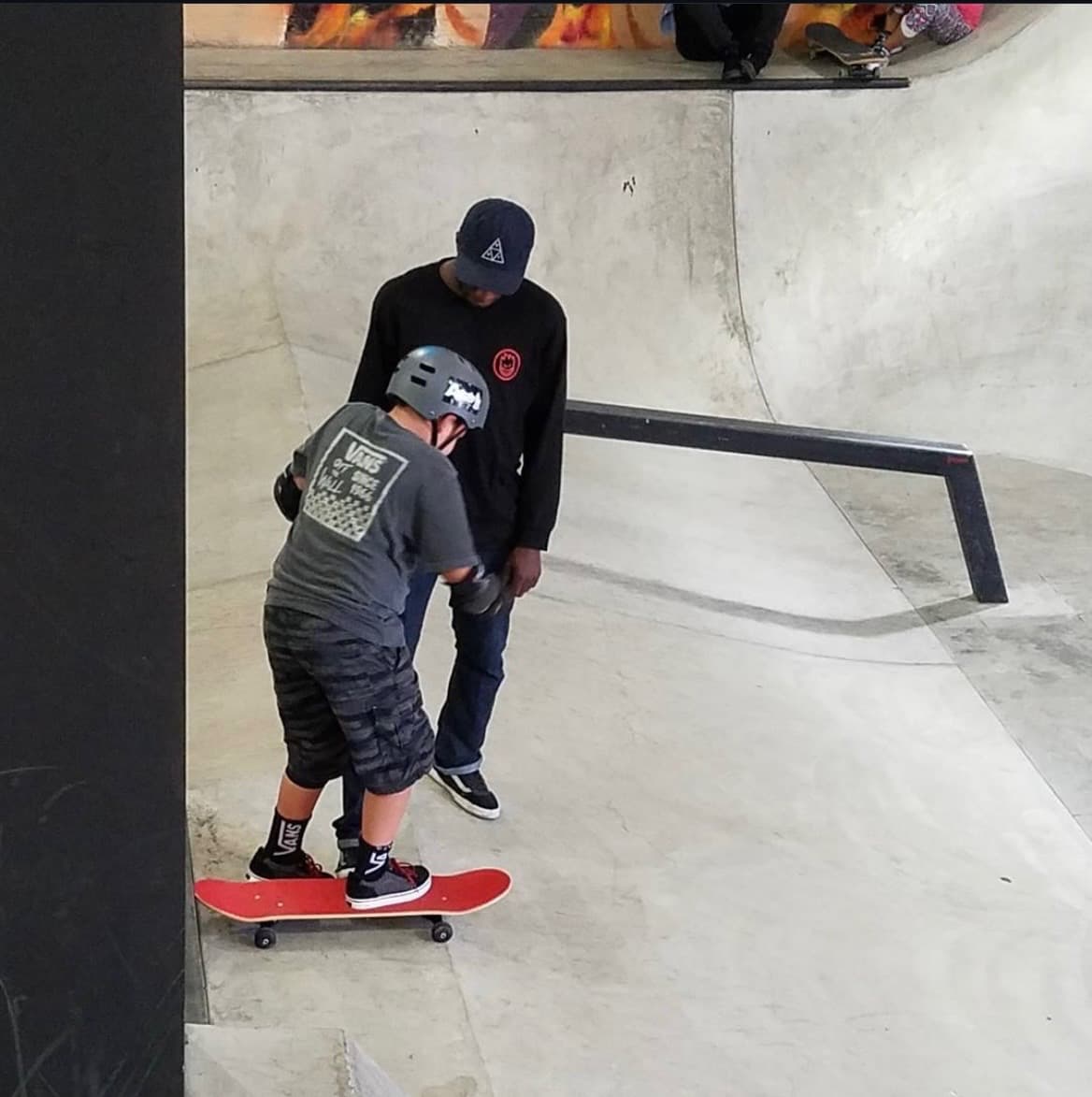
I teach kids to skateboard for a living. I’ve been doing it for years, and before that I was the kid learning. Started at five years old in the Bronx. So when parents tell me they want to teach their kid themselves, I don’t try to talk them out of it. I think it’s great. It’s one of those things you can do together that isn’t staring at a screen.
But I also see the same mistakes over and over. Parents who mean well but skip steps, go too fast, or don’t know what to look for. So this is the guide I’d give a friend. The stuff that works, the stuff that doesn’t, and the moments where bringing in a pro makes the difference.
What gear and surface do you need to teach a kid to skateboard?
A certified skate helmet (CPSC or ASTM rated), knee pads, elbow pads, wrist guards, and flat-soled shoes. Start on grass so the board can’t roll—the CDC reports that most youth skateboarding injuries involve falls during the first few sessions. The right surface and protective gear prevent the majority of those.
This is where a lot of parents blow it. They hand their kid a board in the driveway and say “go for it.” The kid steps on, the board shoots out, they land on their butt, and now they’re done for the day. Maybe for the month.
First: get them in proper gear. Helmet, knee pads, elbow pads, wrist guards. Every time, no exceptions. I don’t care if it’s just the backyard. Kids fall the hardest when they’re least expecting it, and that first session is full of surprises. A certified skate helmet, not a bike helmet. Flat-soled shoes like Vans or Converse. No sandals. No Crocs.
Second: start on grass. I mean it. Put the board on a patch of lawn and let your kid stand on it. The grass keeps the wheels from rolling so they can feel what it’s like to be on the board without the board going anywhere. This one step prevents about 80% of the bad first experiences I hear about from parents.
How long should a kid’s first skateboarding session be?
Fifteen to twenty minutes. Research on motor-skill acquisition in children shows that short, focused practice sessions produce better retention than long ones. Kids burn out fast on unfamiliar physical tasks, and stopping while they still want more is what brings them back tomorrow.
Your first session should be 15 to 20 minutes. That’s it. Parents always want to push it to an hour because they blocked out the time and they want to see progress. But kids burn out fast when they’re learning something physical and unfamiliar, and the difference between stopping while they still want more and stopping after a meltdown is everything.
Here’s what the first session looks like. On the grass: find their stance. Have them stand on the board and see which foot goes forward naturally. Push them gently from behind. Whichever foot they put forward to catch themselves is their lead foot. Left foot forward is regular. Right foot forward is goofy. Neither is wrong.
Once they can stand on the board on grass without wobbling, practice stepping on and off. Front foot on first, back foot follows. Getting off, back foot steps down first. Drill this a bunch of times. It seems boring, but this is how they learn to bail safely instead of just falling.
Then move to smooth, flat pavement. A tennis court or empty parking lot is perfect. Hold their hand at first and let them push once, coast, and step off. That’s it. Push, coast, step off. When they can do that without your hand, the first session is a win. Stop there. Let them feel good about it.
Should you teach kids how to fall on a skateboard?
Yes—before you teach them how to ride. Wrist fractures account for roughly 25% of skateboarding injuries in children under 14, and most happen when kids put their hands out stiff. Teaching them to drop to their knee pads instead eliminates the most common injury mechanism and dramatically reduces fear.
If I could only tell parents one thing, it’s this: teach your kid how to fall before you teach them how to ride. I see parents skip this constantly. They think if they just avoid falling, they won’t need to know how. But kids are going to fall. That’s not a maybe. The question is whether they fall well or badly.
Here’s what I teach. When you feel yourself going down, don’t put your hands out stiff. That’s how wrists break. Instead: bend your knees, get low, and go to your knee pads. If you’re going forward, drop to your knees and slide on your pads. If you’re going backward, sit down and roll. Practice this on grass with the pads on. Kids think it’s hilarious. They’ll do it twenty times for fun.
Once they know how to fall, the fear drops. I’ve seen it hundreds of times. A kid who’s been terrified of the board suddenly starts trying stuff because they know what to do if it goes wrong. That confidence changes everything. It’s why I’m so big on addressing the fear early, for both the kid and the parent.
Want to try it yourself?
Book a private lesson with Leon. NYC and Westchester, all ages and skill levels.
How do you teach skateboarding to different age groups?
Match the approach to the developmental stage. Toddlers aged 3–4 need five-minute play sessions. Kids 5–7 have the balance for real instruction in 20-minute blocks. Children 8–12 process verbal coaching and self-correct—they learn fastest but also need the most patience around their self-consciousness.
Not all kids learn the same way, but age makes a bigger difference than most parents expect. Here’s what I’ve learned teaching kids across every age group.
Toddlers (Ages 3–4)
At this age, forget the word “lesson.” It’s play. You’re holding their hands, they’re standing on the board, maybe sitting on it, maybe pushing it around the living room like a toy car. Five to ten minutes is plenty. The goal isn’t skating. It’s getting comfortable with the board as an object.
I’ve had toddlers who spend the whole session sitting on the board and rolling it with their hands. That’s fine. They’re learning that the board moves, that it feels a certain way, that it’s theirs. Don’t rush this. The biggest mistake I see parents make with this age is expecting too much too fast.
Young Kids (Ages 5–7)
This is the sweet spot for starting real instruction. Most five- and six-year-olds have the balance and coordination to stand on the board, push, and steer. They can follow two- or three-step directions. They still fall a lot, but they’re low to the ground and bounce.
Keep sessions to 20 or 30 minutes. Use a lot of repetition. “Push, coast, step off. Again. One more time.” This age responds to small wins. Celebrate the heck out of the first solo push. The first time they turn without thinking about it. These moments stick.
One thing to watch for: this is the age where kids sometimes want to hold your hand forever. That feels safe for both of you, but it slows them down. Once they can stand and push, start letting go. Walk beside them instead of holding on. They need to find their own balance, and they can’t do that attached to your arm.
Older Kids (Ages 8–12)
This group picks things up fastest. They can process verbal instruction, self-correct, and practice on their own between sessions. They’re also the most likely to try to skip ahead. An eight-year-old who watched three skate videos is going to want to kickflip on day two. Your job is to slow them down without killing their motivation.
The trade-off with this age is that they’re more self-conscious. A five-year-old doesn’t care who’s watching them wobble. A ten-year-old might. If your kid seems embarrassed or is getting frustrated in front of siblings or other kids, find a quieter spot. An empty parking lot after dinner is gold.
Older kids also do better with goals. “Today we’re going to work on turning” lands better than “just practice.” Give them something specific to aim for.
What mistakes do parents make teaching kids to skateboard?
The five most common: starting on pavement instead of grass, skipping protective gear for short sessions, not teaching falling technique, holding their child’s hands too long, and pushing past the frustration point. All five come from good intentions. All five are easy to fix once you know to watch for them.
I’m not listing these to make anyone feel bad. Most of them come from caring a lot and just not knowing. But they slow kids down or make the experience worse, and they’re all fixable.
Starting on pavement instead of grass. Letting their kid skip gear because “it’s just the driveway” (the driveway is where most beginner falls happen). Not teaching them how to fall before teaching them how to ride.
Holding on too long. I get it, walking next to them with both hands feels safer. But your kid can’t find their own balance while they’re attached to your arm. Let go sooner than feels comfortable.
Pushing past the frustration point. If your kid is done, they’re done. Forcing it turns skateboarding into homework. And buying a cheap plastic board from the toy aisle. Those things have terrible bearings, they’re heavy, and they make learning harder than it needs to be. A proper complete from a skate shop runs $80 to $120.
When should parents stop pushing kids on skateboarding?
When it stops being fun for either of you. Child-development research consistently shows that intrinsic motivation—not parental pressure—drives long-term skill development. If your kid stops asking to skate, argues every time you suggest it, or melts down during sessions, take a break. A week off protects years of interest.
There’s a version of this where you’re coaching and your kid is having a blast and you’re bonding. That’s the version parents picture. But there’s also a version where you’re getting frustrated, your kid is picking up on it, and the whole thing turns into a battle. I hear about this one a lot.
Teaching your own kid is hard. Harder than teaching somebody else’s kid. There’s a dynamic between parent and child that gets in the way. Your kid will test boundaries with you that they’d never test with a stranger. And you might have less patience with your own kid than you would with someone else’s. That’s normal.
Signs it’s time to step back: they stop asking to skate. They argue every time you suggest practicing. They get upset and you get upset and nobody has fun. When that happens, take a break. Come back to it in a week, or a month. Or let someone else teach them.
When should you hire a skateboard instructor for your kid?
When your child has the basics but plateaus, develops bad habits you can’t diagnose, wants to learn tricks or ramps, or when the parent-child dynamic is creating friction. Even one or two professional sessions can correct form issues and give both of you a clearer framework for practicing at home.
I’m obviously biased here, so take this for what it is. But there are specific points where a professional lesson is worth it, even if you’ve been doing fine on your own.
If your kid has the basics but isn’t progressing. If they’re developing a habit you can’t fix, like riding with their weight too far back or pushing mongo. If they want to learn tricks or ride transition and you don’t know how to teach that. If the parent-kid dynamic is getting in the way. Or if you just don’t skate yourself and you’re running out of things to teach.
One or two lessons with an instructor can correct bad habits, fill in gaps, and give your kid a foundation that’ll last. Then you go back to practicing together with a better framework. It’s not an either/or thing.
What matters most when teaching a kid to skateboard?
Patience and presence. Studies on youth sports attrition show that the top reason kids quit an activity isn’t difficulty—it’s that it stopped being fun. Your job isn’t to produce a great skater. It’s to protect the joy long enough for your kid to find their own reasons to keep going.
Here’s what I want parents to walk away with. Your kid doesn’t need a perfect teacher. They need someone who shows up, stays patient, and lets them go at their own pace. The fact that you’re reading a guide on how to teach your kid to skateboard means you’re already that person.
Get the gear. Start on grass. Teach them to fall. Keep it short. Stop while it’s fun. And the day they push off and roll across a parking lot without looking back at you, you’ll know it was worth every scraped knee.
Frequently Asked Questions
Can I teach my kid to skateboard if I don't skate myself?+
Yes, up to a point. You can teach the basics — standing, pushing, stopping, and falling safely — by following a solid guide and going slow. Where it gets harder is correcting form issues you can't see and progressing past the fundamentals. That's a good time to bring in an instructor for a session or two.
What age can a child start learning to skateboard?+
Kids as young as 3 can stand on a board with help, though it's mostly play at that age. Structured learning works best from age 5 and up, when most kids have the balance and attention span to follow directions. Kids 8-12 pick things up fastest.
What safety gear do kids need to skateboard?+
A certified skate helmet (CPSC or ASTM rated), knee pads, elbow pads, wrist guards, and flat-soled closed-toe shoes. No exceptions, even in the backyard. The gear is what turns a bad fall into a minor one.
What mistakes do parents make when teaching kids to skateboard?+
The most common: starting on pavement instead of grass, not teaching falling technique, holding on too long, pushing past the frustration point, skipping gear, and buying cheap toy-store boards. All of these are easy to fix once you know about them.
When should I get a professional skateboard instructor?+
When your kid has the basics but isn't progressing, when they're developing bad habits, when they want to learn tricks or ride ramps, or when the parent-child dynamic is making it unfun. Even one or two pro lessons can fill in the gaps and give you both a better framework to keep practicing.
See kids lesson options and pricing, or read the full gear guide.
Need a hand? That’s what I’m here for.
Private and group skateboard lessons for kids ages 3 and up in NYC and Westchester. Patient instruction, proper safety gear, and 33 years on a board.