Skateboarding, Anxiety, and Why Getting Outside Matters
Skateboarding won’t cure your anxiety. But it might be the best hour of your week.
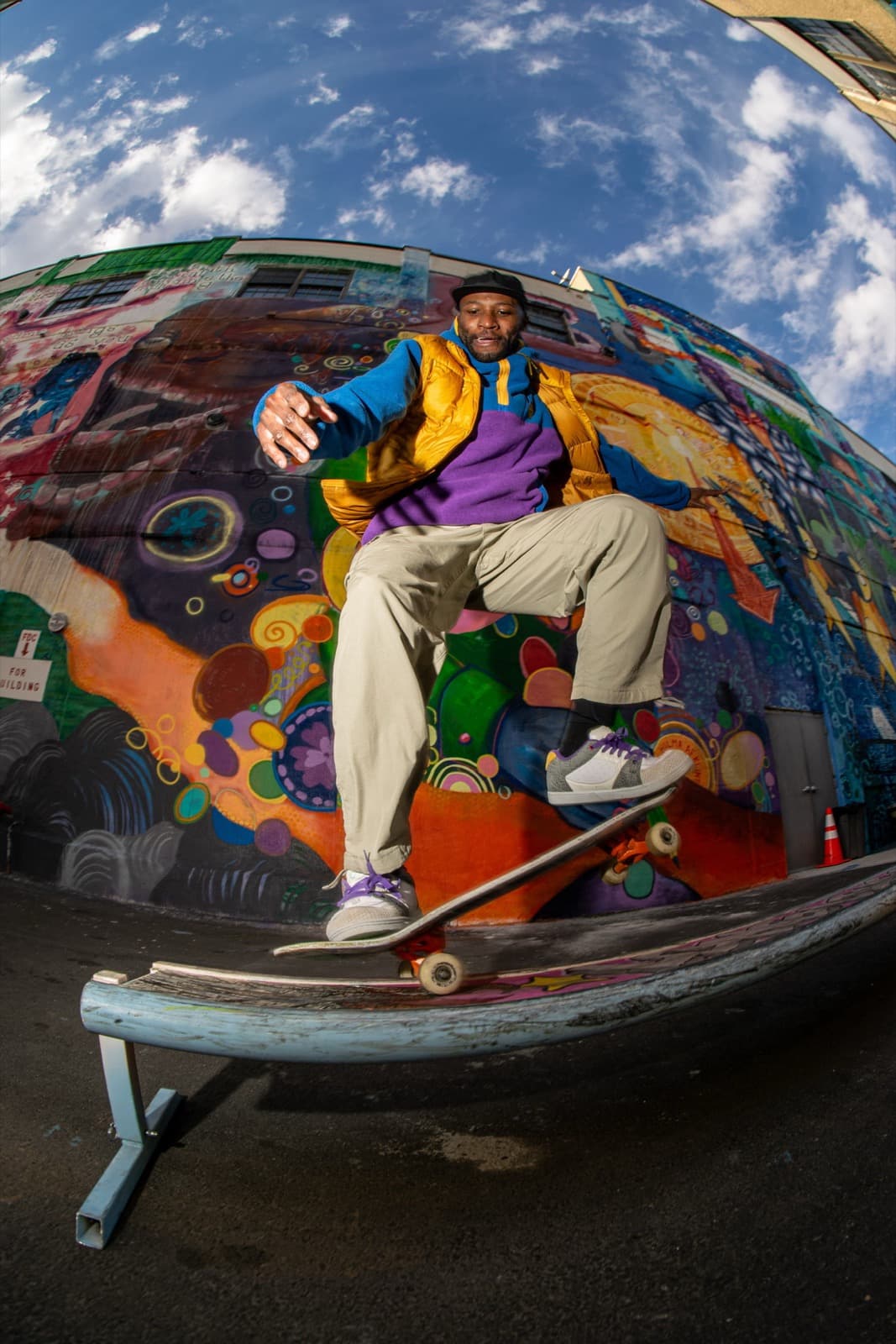
People show up to their first lesson wound tight. I can see it in their shoulders, in how they grip the board, in the way they apologize before they’ve even done anything wrong. They’re stressed from work, anxious about being a beginner, carrying their whole day on their back. I recognize it because I’ve been teaching for over 20 years and I’ve seen it hundreds of times.
Then thirty minutes in, something shifts. They’re laughing. They’re asking questions. They’re completely present, not checking their phone, not thinking about tomorrow’s meeting. I didn’t plan for that to happen. I didn’t give them a pep talk. They just started moving, and the moving did its thing.
I’ve been skating for 33 years. I’m not a therapist and I won’t pretend to be one. But I know what I see, and what I see is that an hour on a skateboard does something real for people who are carrying too much.
Does skateboarding help with anxiety?
Yes—and the research backs it up. The American Psychological Association has consistently found that regular physical activity reduces anxiety symptoms by 20 to 30 percent in both children and adults. Skateboarding combines that physical exertion with forced concentration and outdoor exposure, creating conditions that lower cortisol and interrupt anxious thought patterns. Studies specific to skateboarding describe participants reporting a deep sense of calm and wellbeing after sessions.
A Nottingham Trent University study looked at female skateboarders aged 8 to 27 and found that skateboarding creates a deep sense of wellbeing and calm. The participants didn’t describe it in clinical terms. They called it “free therapy.” That phrase stuck with me because I hear versions of it from my students all the time. “This is better than my actual therapy session this week,” one of my adult students told me last month. She was joking, mostly. But there was truth in it.
A Skateboard GB report found a striking correlation between people who skateboard regularly and improved mental health outcomes. Participation surged during the pandemic, which makes sense. When the world felt completely out of control, people reached for something physical, something outdoors, something they could do on their own terms. Skateboarding checked every box.
None of this surprises me. The researchers are confirming what skaters have felt in their bones for decades. But it’s good to see the data, because it gives language to something that can be hard to explain: why standing on a piece of wood with wheels makes you feel so much better.
Why does skateboarding reduce anxiety?
Skateboarding reduces anxiety through three simultaneous mechanisms: physical exertion that releases endorphins and lowers cortisol, intense concentration that pulls the brain out of rumination, and outdoor movement in natural light. The CDC reports that fewer than one in four youth meet recommended physical activity guidelines—skateboarding offers an entry point that feels like play rather than exercise, making it easier to stick with consistently.
I think three things are happening at once, and the combination is what makes skateboarding so effective for anxious minds.
First, the physical exertion. Skating is a full-body workout. Your legs, your core, your arms for balance. That kind of effort releases endorphins and lowers cortisol, the stress hormone. Your body is literally burning off the tension you walked in with. This is true of any exercise, but skating has a way of sneaking the workout in. You don’t feel like you’re on a treadmill. You feel like you’re playing.
Second, the concentration. Skateboarding demands your full attention. You can’t ruminate about your inbox while trying to stay balanced on a moving board. Your brain gets pulled off the anxiety loop because it has no choice. Every ounce of focus goes to your feet, your weight distribution, the crack in the pavement ahead of you. That forced presence is powerful.
Third, you’re outside. In sunlight. Moving your body through actual space, feeling wind on your face, hearing the sounds of the city or the park around you. That combination alone, outdoor physical activity in natural light, is one of the most consistently supported interventions for anxiety and depression in the research literature. Skateboarding just happens to package all of it into something genuinely fun.
How does skateboarding create a flow state for anxiety relief?
Skateboarding is one of the strongest triggers for what psychologist Mihaly Csikszentmihalyi called “flow”—a state of total absorption where self-consciousness and worry temporarily shut down. Research published in the Journal of Clinical Sport Psychology confirms that activities combining high autonomy with immediate feedback produce the deepest flow states. Skateboarding delivers both: you choose what to practice, and you know within a second whether it worked.
Psychologist Mihaly Csikszentmihalyi spent his career studying what he called “flow,” that state of total absorption where time disappears and self-consciousness drops away. You’ve probably felt it before. Maybe while cooking, or playing music, or running. It’s when the difficulty of the task perfectly matches your skill level, and your brain locks in completely.
Skateboarding is uniquely suited to producing flow. A study in the Journal of Happiness Studies found that activities with high autonomy and immediate feedback, where you set your own goals and see the results instantly, are the strongest triggers for flow states. Skateboarding has both in abundance. Nobody tells you what to practice. You pick a trick, you try it, and you know within a second whether it worked. That tight feedback loop keeps your brain engaged at exactly the right level.
When you’re in flow, anxiety can’t reach you. That’s not a metaphor. The mental state of flow literally suppresses the part of your brain responsible for self-monitoring and worry. For an hour, you get a break from yourself. And when you come out of it, the volume on everything that was bothering you has been turned down a few notches.
Want to try it yourself?
Book a private lesson with Leon. NYC and Westchester, all ages and skill levels.
Is skateboarding a social activity for anxious kids?
It is—and in a way that works for kids who struggle with traditional team settings. The CDC’s youth mental health data shows that persistent feelings of sadness and hopelessness among U.S. high schoolers reached 42 percent in recent surveys, with social isolation as a key driver. Skateparks function as low-pressure communities where encouragement is the default, nobody keeps score, and showing up is the only requirement for belonging.
Research from the USC Pullias Center found that skateparks function as communities of care. These are spaces where people recover through movement, relationships, and collective support. During and after the pandemic, skateparks became essential mental health infrastructure for entire neighborhoods. That finding resonated with me deeply, because I’ve watched it happen in real time at parks all over New York.
The culture at skateparks is inherently encouraging. Strangers cheer when you try something new. Nobody cares how old you are or how good you are. If you’re out there trying, you belong. That sense of acceptance matters, especially for people dealing with isolation or social anxiety. A lot of my students tell me they expected the skatepark to be intimidating and found the opposite.
Anxiety thrives in isolation. When you’re stuck in your head, alone, the thoughts get louder. Skating pulls you out of that. You’re around other people who are also falling and getting back up, also figuring things out, also just trying to have a good time. There’s something quietly healing about that shared experience. I wrote more about the community side of skating in my piece on why skateboarding builds resilience.
What should anxious kids know before trying skateboarding?
The most important thing is that you don’t need any skill for skateboarding to help with anxiety. The APA’s research on exercise and anxiety shows that mental health benefits begin with the very first session of physical activity—not after weeks of training. I tell every new student the same thing: forget tricks, forget looking cool. Just push across the lot and notice how your brain quiets down, even for a few seconds. That’s the beginning.
You don’t need to be good at this for it to help you. The benefits start on day one. I tell every new student the same thing: forget about tricks, forget about looking cool, just push across the lot and pay attention to how it feels. The first time you roll forward under your own power and feel the wind, something clicks. Your brain quiets down, even if only for a few seconds. That’s the beginning.
I’ll be honest, skating is also frustrating sometimes. You’ll try something ten times and not get it. You’ll feel clumsy. You’ll wonder why you’re doing this instead of sitting on your couch. But that frustration has a purpose. You’re working through something, physically and mentally, and that process itself builds confidence. When you finally get the thing you’ve been struggling with, the satisfaction is real. Not manufactured, not handed to you. You earned it.
I’ve seen students come in barely making eye contact and leave grinning. I’ve seen people who told me they hadn’t exercised in years suddenly asking when we can skate again. I see similar breakthroughs with students who have ADHD. The common thread is always the same: they expected to learn skateboarding and got something they didn’t expect on top of it. A reset. A breath. An hour where the noise in their head finally went quiet.
If you’ve been thinking about trying skateboarding, stop thinking and come try it. You don’t need any experience. You don’t need to be athletic. Read my guide to your first lesson if you want to know what to expect. You just need to show up and be willing to feel a little uncomfortable for a few minutes. The rest tends to take care of itself.
Frequently Asked Questions
Can skateboarding help with anxiety?+
Why is skateboarding good for mental health?+
Do you need to be good at skateboarding for it to reduce stress?+
Is skateboarding better for anxiety than other exercise?+
Come try it
Personalized skateboard lessons in NYC. No experience needed. Just show up and see how it feels.
Book a Lesson