Skateboarding Is an Analog Art Form
In a world that runs on screens and algorithms, skateboarding asks you to do something radical: be in your body, in a real place, making something with nothing but a board and the ground beneath you.
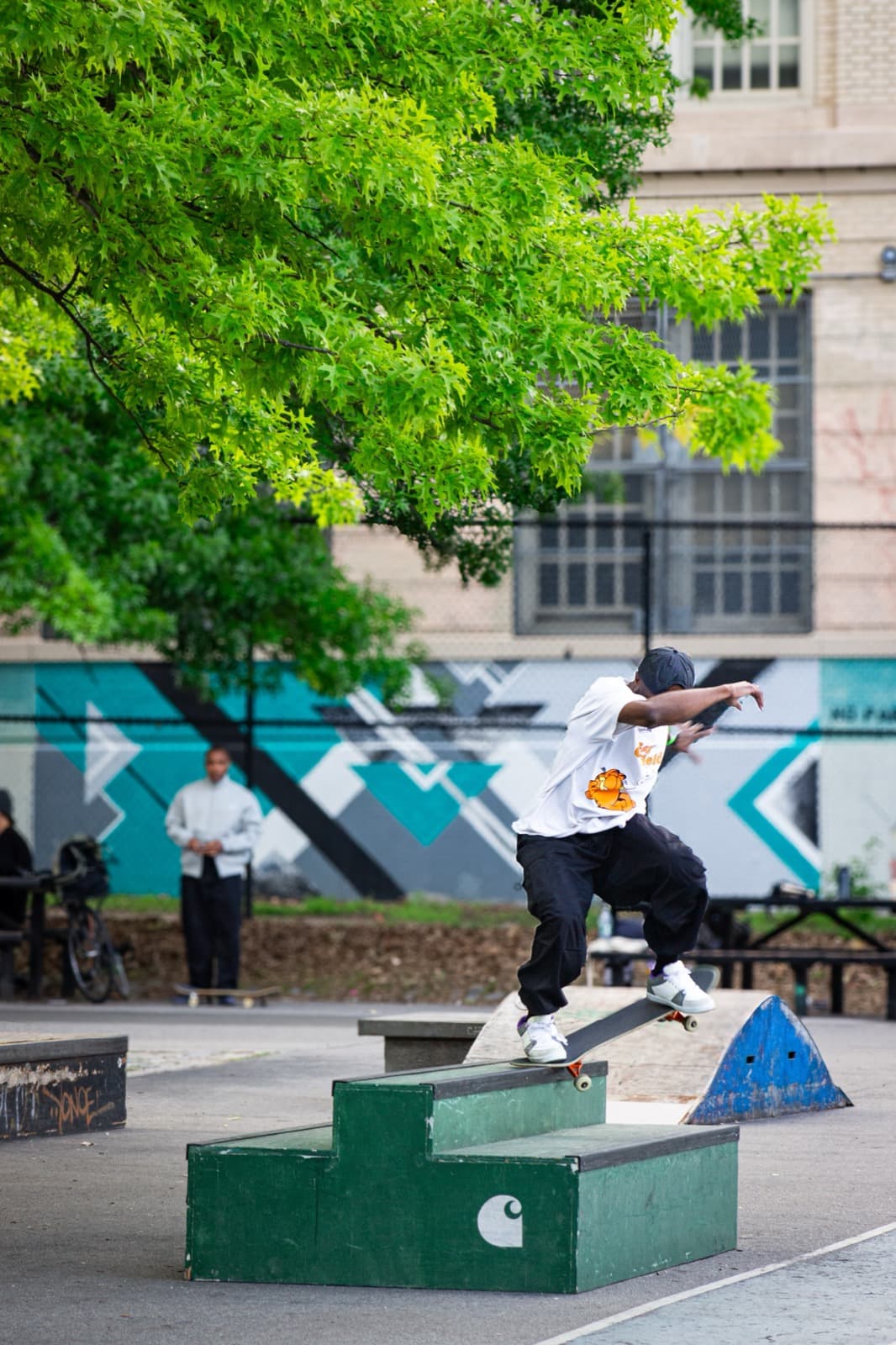
I’ve never thought of skateboarding as just a sport. A sport has rules, referees, a scoreboard. Skateboarding has none of that. There’s no right way to do it. No one telling you what trick to learn next. No clock running down. It’s closer to painting or playing music than it is to basketball or soccer.
Tony Hawk once said he considers skateboarding an art form, a lifestyle, and a sport. I’d go further: the art comes first. The sport part is almost incidental.
Why Does Every Skater Have a Different Style?
Skateboarding is one of the few physical activities where personal expression matters more than standardized technique. No two people do the same trick the same way. Your stance, timing, and body language combine into a creative signature from your very first session—and in skate culture, style has always been valued as much as skill.
This is the part that gets me. In most sports, the goal is to execute a technique as perfectly as possible, the way you’ve been coached. In skateboarding, the goal is to make it yours. No two people kickflip the same way. No two people carve a bowl with the same body language. Your stance, your timing, the way you flick your foot. That’s your signature. That’s your style.
I see this in my students from the very beginning. Even two people learning to push for the first time look completely different doing it. One leans forward aggressively. Another takes these long, smooth strides. Neither is wrong. Both are developing a creative voice they didn’t know they had.
How Does Skateboarding Change the Way You See the World?
Skaters develop a completely different relationship with their environment. Every curb, ledge, and slope becomes raw creative material—a form of spatial reimagination that never switches off. With an estimated 8.8 million skateboarders in the U.S. according to the Sports & Fitness Industry Association, that’s millions of people seeing architecture the rest of the world walks past.
Once you skate, you can’t unsee it. A set of stairs isn’t just stairs anymore. It’s a gap. A ledge outside a bank isn’t furniture. It’s a grind spot. A parking garage on a Sunday morning is a private skatepark with perfect smooth concrete and no one around.
Skaters look at cities the way architects do, but instead of designing spaces, we reimagine them. Every curb, every slope, every bench becomes raw material for something creative. New York City is the best canvas in the world for this. The variety of terrain here is endless. Marble ledges downtown, smooth paths along the river, concrete bowls in Brooklyn. Every session is a conversation between you and the environment.
What Makes Skateboarding Culture So Creative?
Skateboarding has always run on a do-it-yourself ethos—build your own ramps, film your own videos, design your own graphics, start your own brand. That creative energy shaped entire industries. Supreme, which started as a single New York skate shop in 1994, was acquired for $2.1 billion in 2020—proof that skate culture’s DIY DNA scales.
Skateboarding has always been a culture of making things. Skaters build ramps in their driveways. They film each other with whatever camera they have. They design graphics for their boards. They start brands out of their apartments. The entire culture runs on a punk-rock ethos: you don’t wait for permission. You just make it happen.
That creative energy has shaped entire industries. Modern streetwear was born from skate culture. Brands like Supreme and Palace started as skate shops. Punk rock and hip-hop both intersected with skating in ways that shaped music for decades. Skate decks now hang in galleries and auction at Christie’s. The board itself has become a canvas.
Want to try it yourself?
Book a private lesson with Leon. NYC and Westchester, all ages and skill levels.
Why Does Skateboarding Feel So Different from Everything Else Right Now?
In an era where most activities are screen-mediated, skateboarding remains stubbornly physical. No app can replicate it. No algorithm can optimize it. U.S. skateboarding participation rose over 30% between 2020 and 2022 according to industry reports, suggesting more people are craving the kind of unfiltered, embodied experience that only analog practices provide.
We live in a world where most of what we do is mediated by a screen. We work on screens. We socialize on screens. We exercise by watching screens. Even our creative outlets, making music, editing photos, writing, happen on screens.
Skateboarding is stubbornly, beautifully analog. There is no app for it. You cannot automate it. AI cannot do it for you. It requires your physical body, in a physical space, responding to real gravity and real concrete in real time. The feedback is immediate and honest. You either landed it or you didn’t. No filter, no edit button, no undo.
That’s rare now. And I think that’s why skateboarding keeps growing even as every other distraction competes for people’s attention. It’s also why skateboarding can be so effective for managing anxiety. There’s a deep human need to make something with your hands, or in this case, your feet. To be fully present in something physical. To feel the flow state that comes from total absorption in a creative act.
Do Beginners Really Develop Their Own Skateboarding Style?
Yes, and it happens naturally from the first push. Even two people learning the same basic technique will move differently—different weight shifts, different arm positions, different rhythms. Skateboarding is one of the rare activities where there is no single correct form. Your body finds its own language, and that language is your style.
One of the things I love about teaching is watching someone discover their own style before they even realize it’s happening. A student who’s never been on a board will naturally do things that are completely unique to them. The way they shift their weight, the way they use their arms, the rhythm of their push. That’s not something I teach. That’s something they bring.
In most parts of life, we’re told to conform. Follow the template. Hit the metrics. Skateboarding is one of the few spaces left where being different is the entire point. Your creativity isn’t a bonus. It’s the core of the practice.
Can Skateboarding Lead to Creative Opportunities?
It can and it does. The global skateboarding market is valued at over $2.4 billion, spanning film, fashion, music, and live performance. Skateboarding’s inclusion in the Olympics since Tokyo 2021 has expanded those pathways further. The skills it builds—improvisation, body awareness, creative risk-taking—translate directly into performance, media, and brand work.
I’ve been skating for over 30 years. I’ve also worked as a skate actor and performer. I’ve been on sets for HBO, worked with brands, performed in live events. And every single one of those opportunities came because skateboarding is a creative practice, not just a physical one. It taught me how to move with intention, how to express something with my body, how to improvise and adapt in the moment.
When I teach, I’m teaching someone a creative practice that will change the way they see the world and the way they move through it. The riding is where it starts, but it goes way beyond that. That’s what makes it an art form.
Frequently Asked Questions
Is skateboarding an art form or a sport?+
How does skateboarding influence art and fashion?+
Why is skateboarding good for creativity?+
Can beginners develop their own skateboarding style?+
Start your own creative practice
Personalized skateboard lessons in NYC for adults, kids, and families. No experience needed, just an open mind and comfortable shoes.
Book a Lesson